Introductory price — today only

📄 Digital book in PDF: it comes by email. Nothing is shipped on paper.

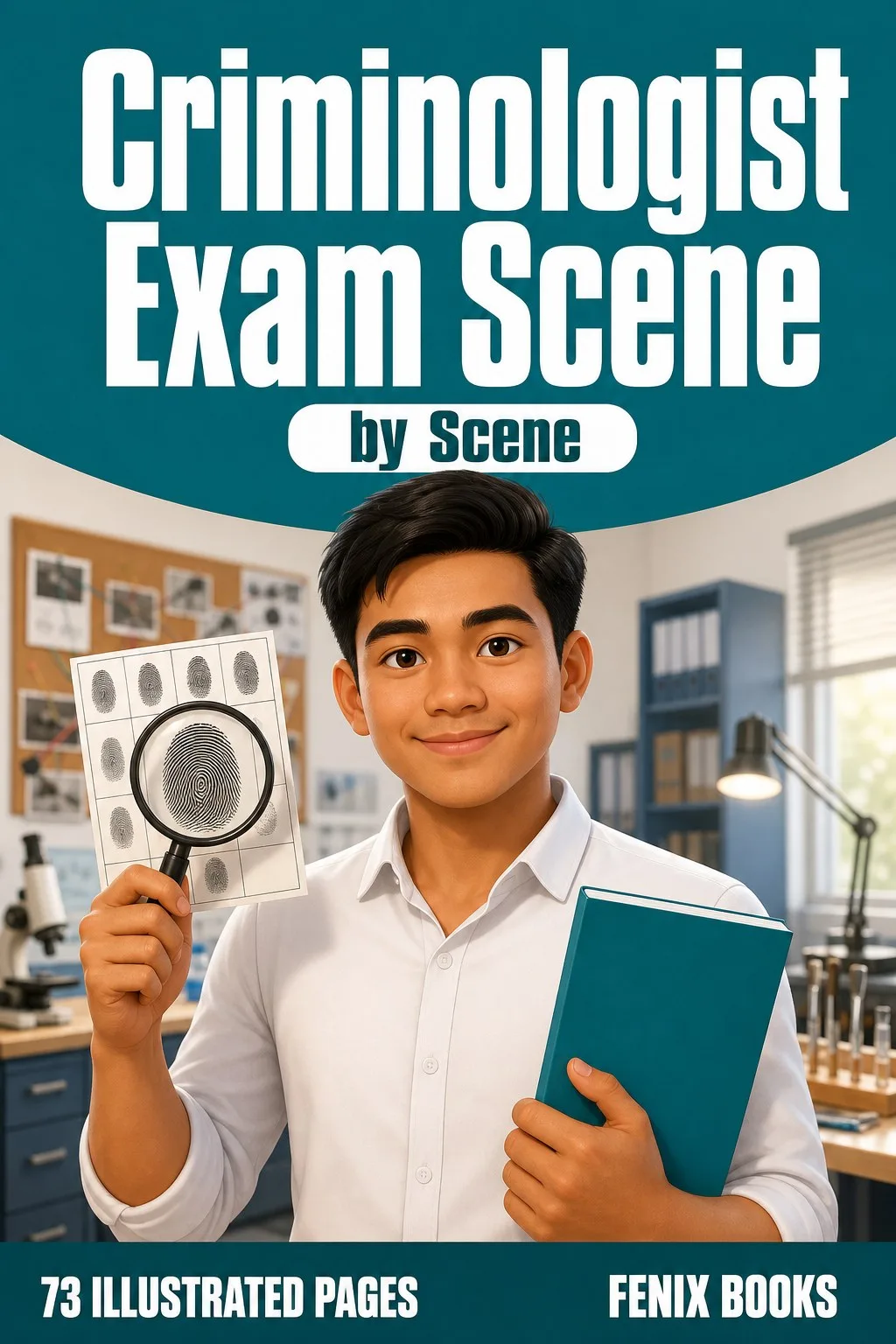
Criminologist Exam Scene by Scene: the 6 subjects drawn, one topic per page sorted by weight, with the 75 weighted average and the 60 minimum in view

How to review all 6 subjects in order without losing what you studied yesterday

I want the review guide ➔

🔒 Protected checkout · PDF by email · 30-day guarantee

73topics, each with a drawing
6subjects by weight
2bonus books included
PDFread on your phone

Take a look inside the book

Open it on your phone at your desk, in the library, or on the way to the review center — or print the pages you need.

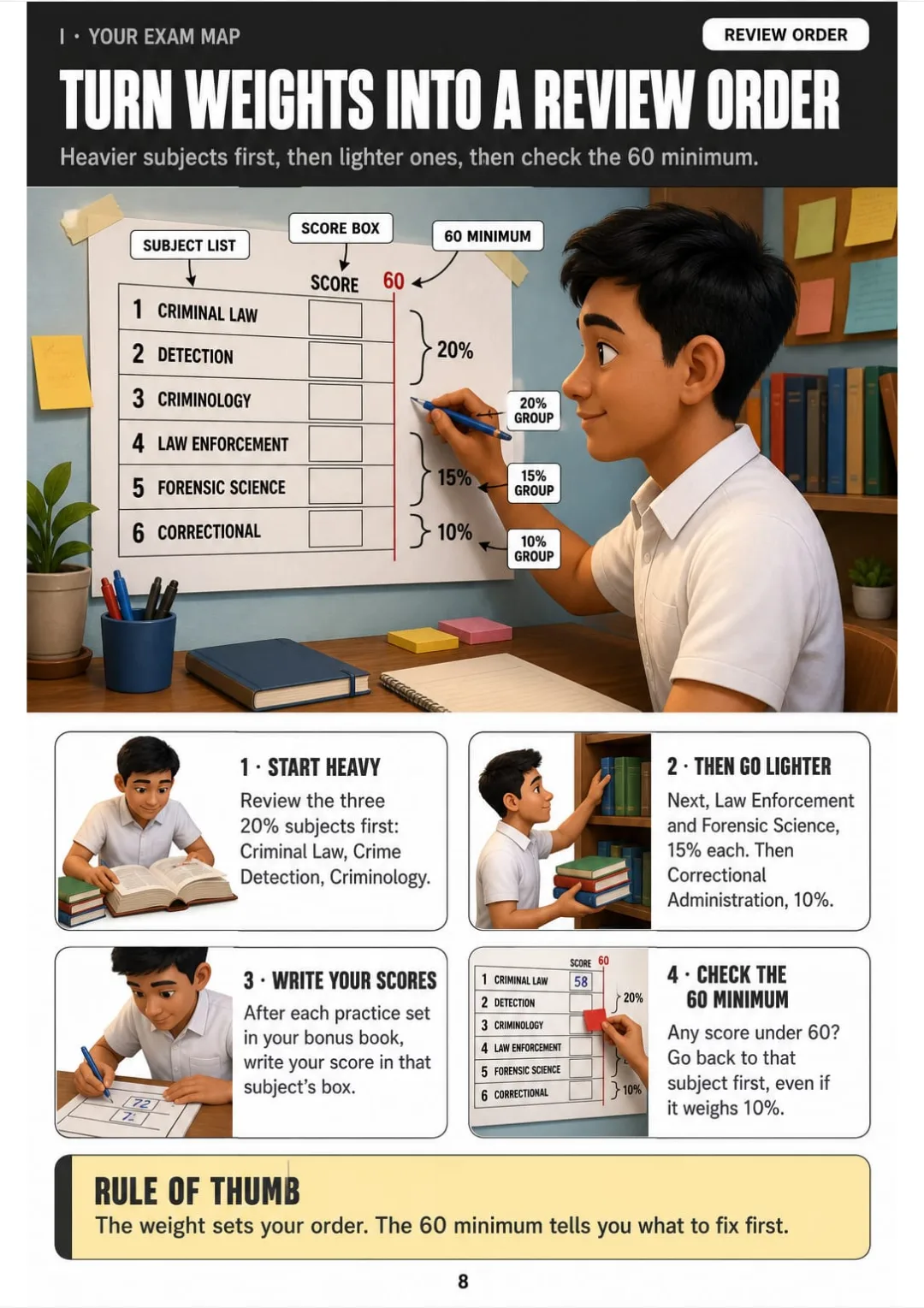
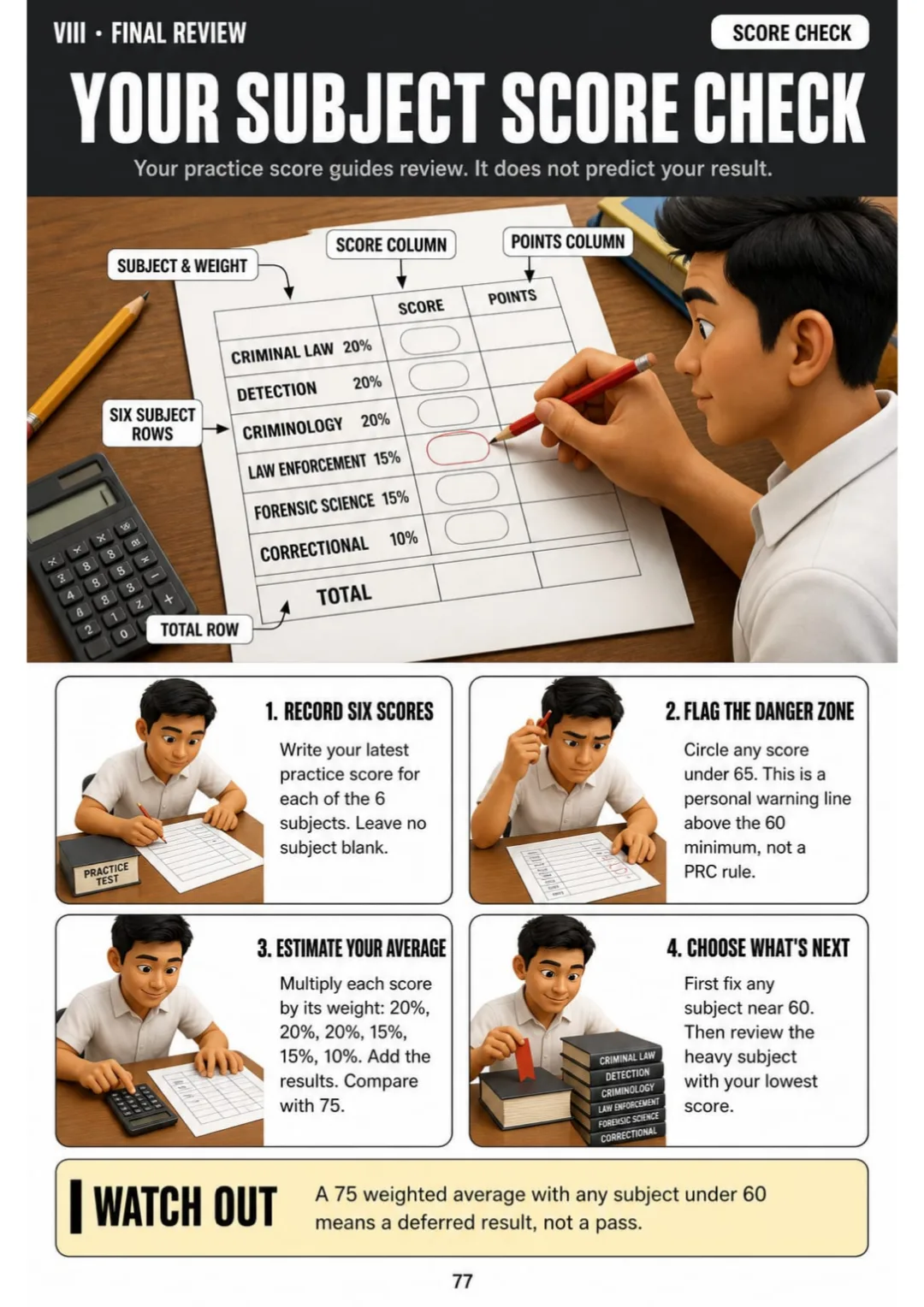
A simple tracker: 6 subjects in review order, one score box each, checked against the 60 minimum.
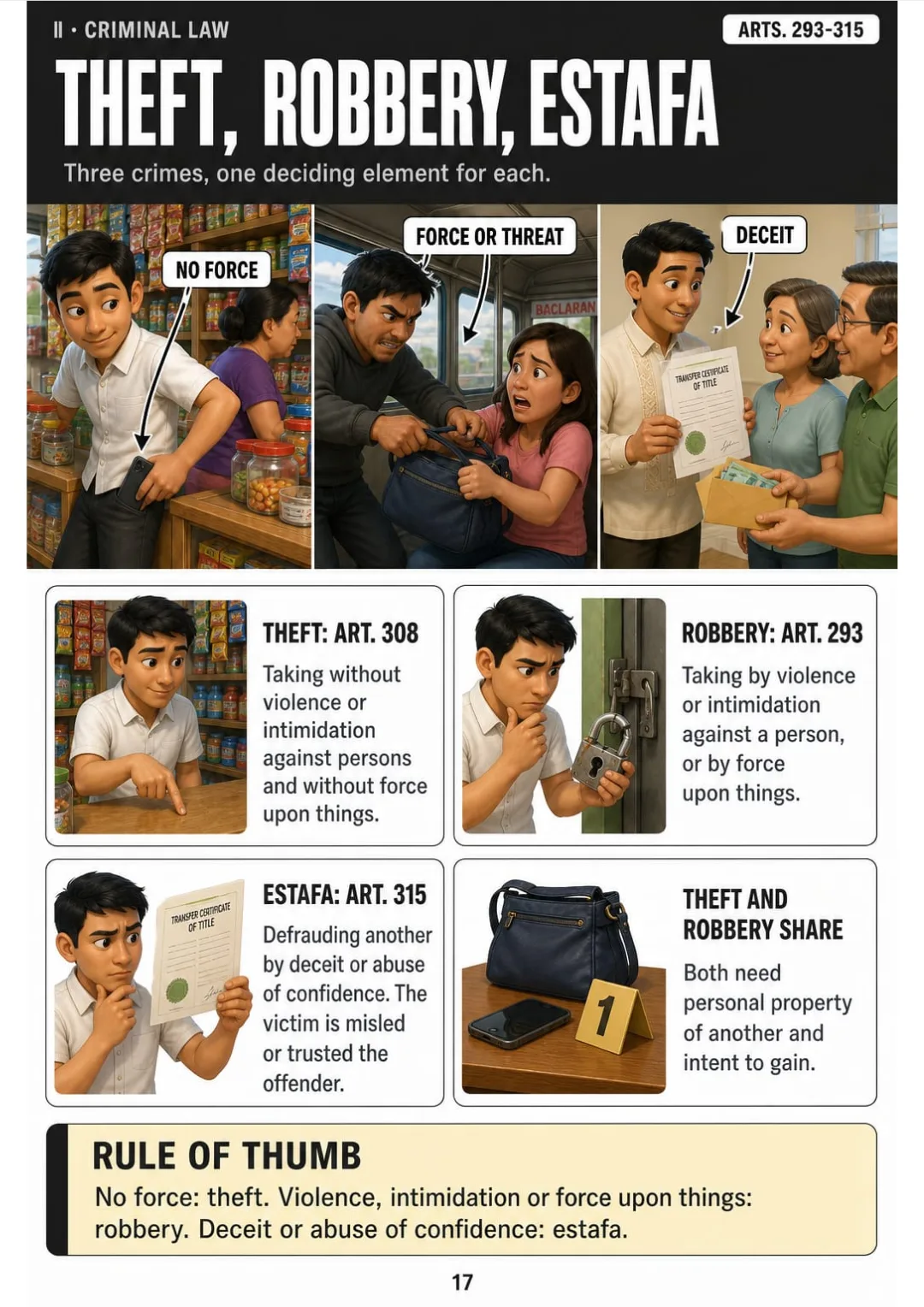
Arts. 308, 293 and 315: one deciding element separates each crime.
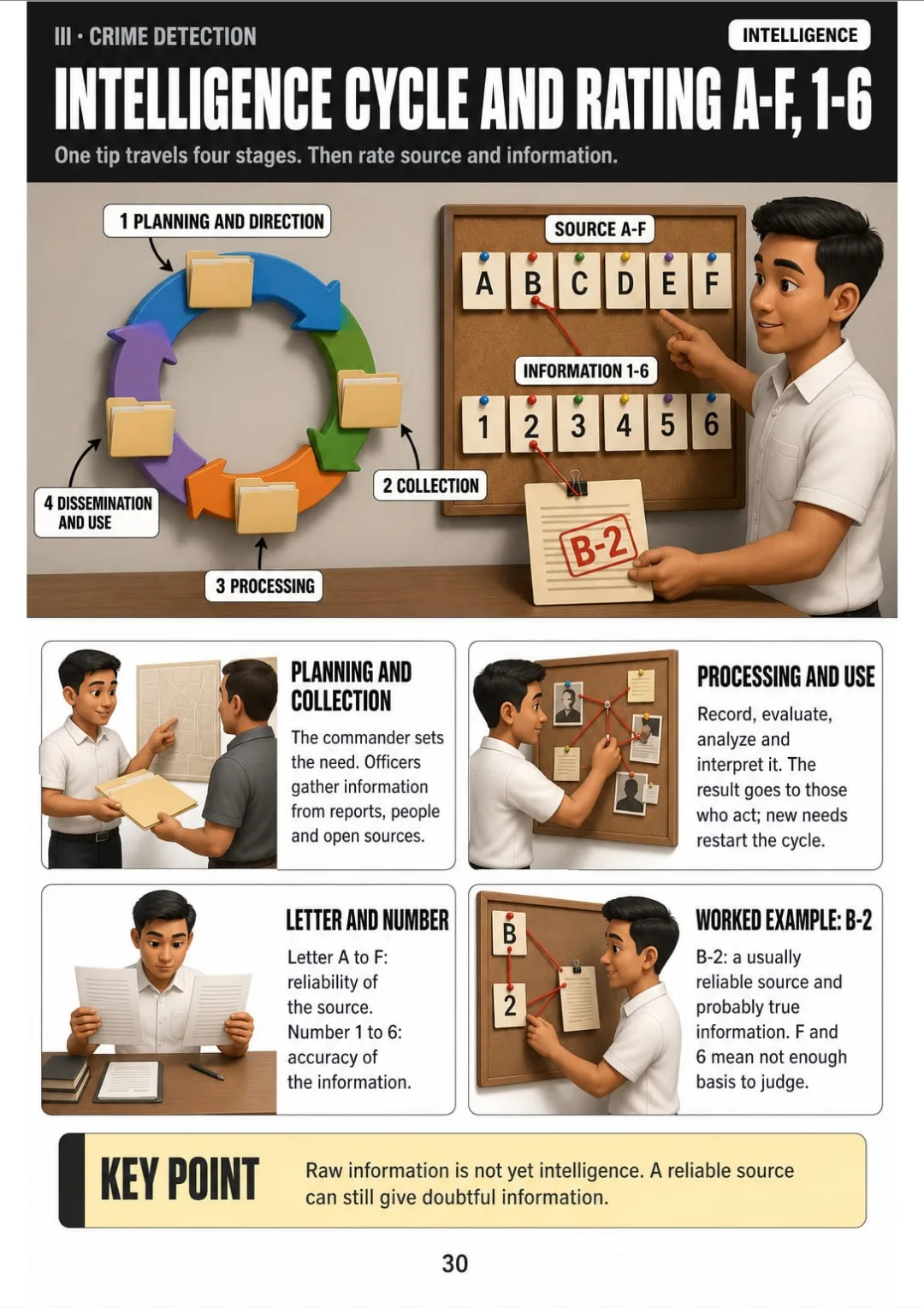
Four stages of the cycle, then letters A to F for the source and numbers 1 to 6 for the information.
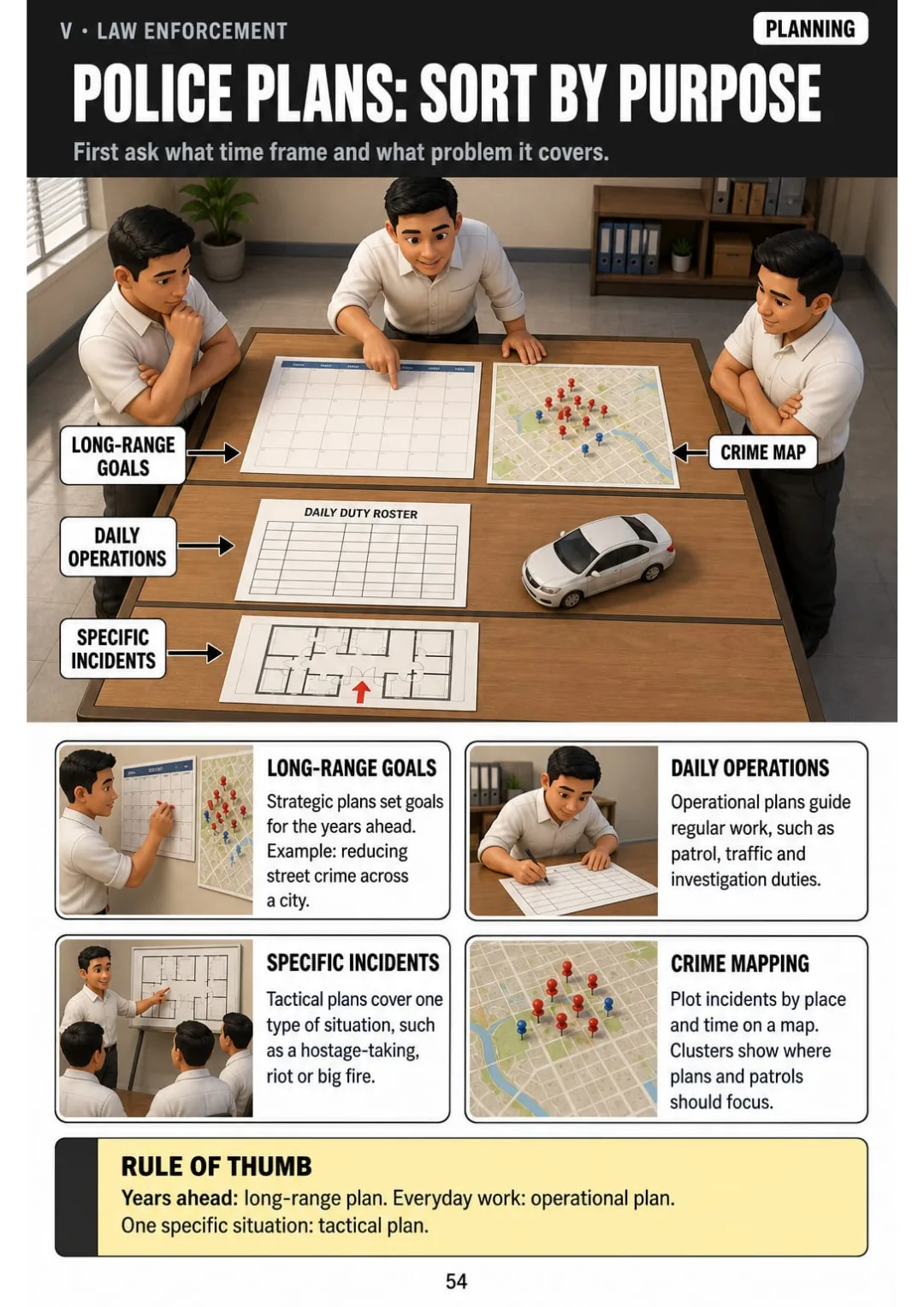
Police plans sorted three ways: long-range goals, daily operations and specific incidents, plus crime mapping.
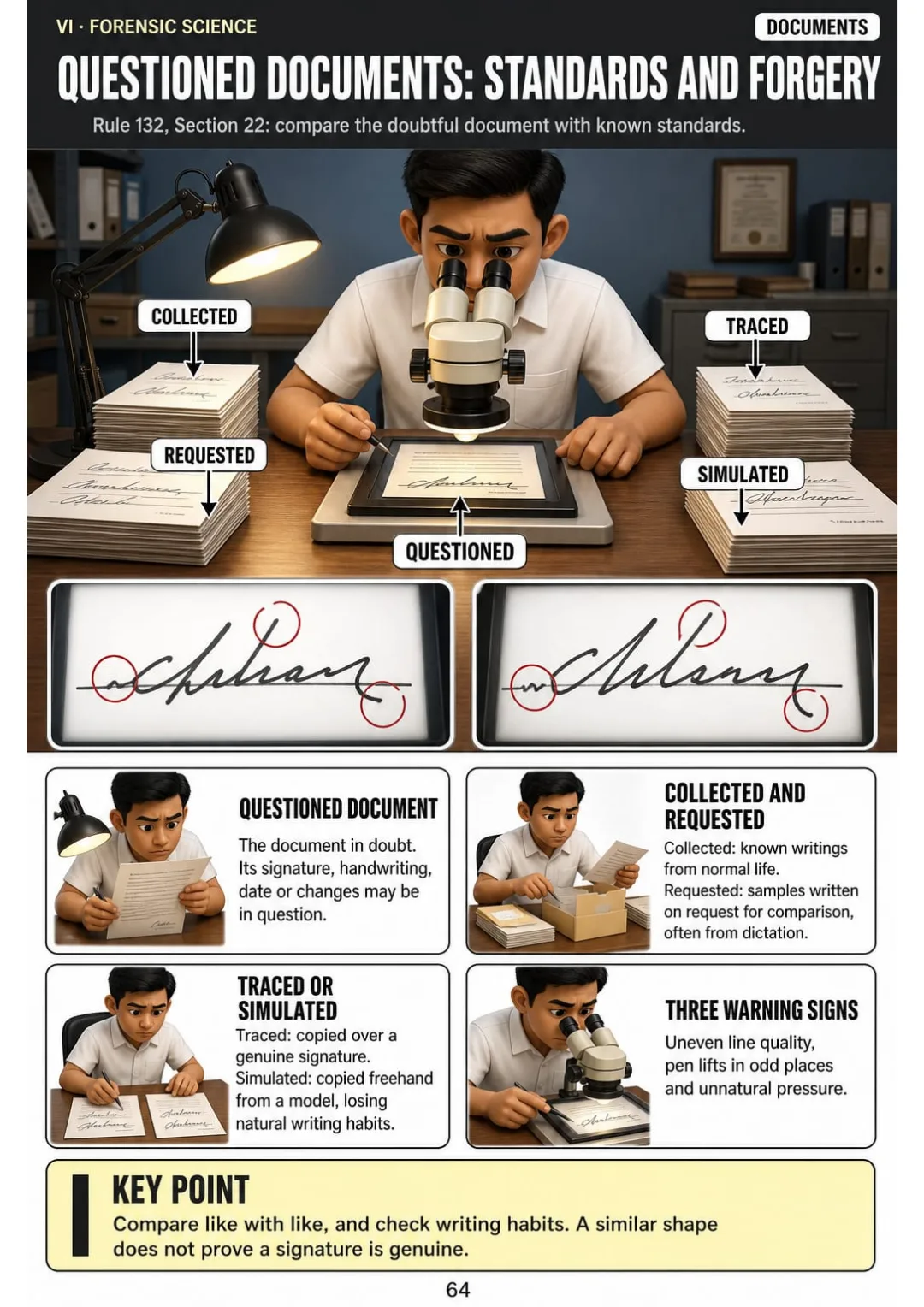
Questioned document versus known standards, collected or requested, plus traced and simulated forgery.
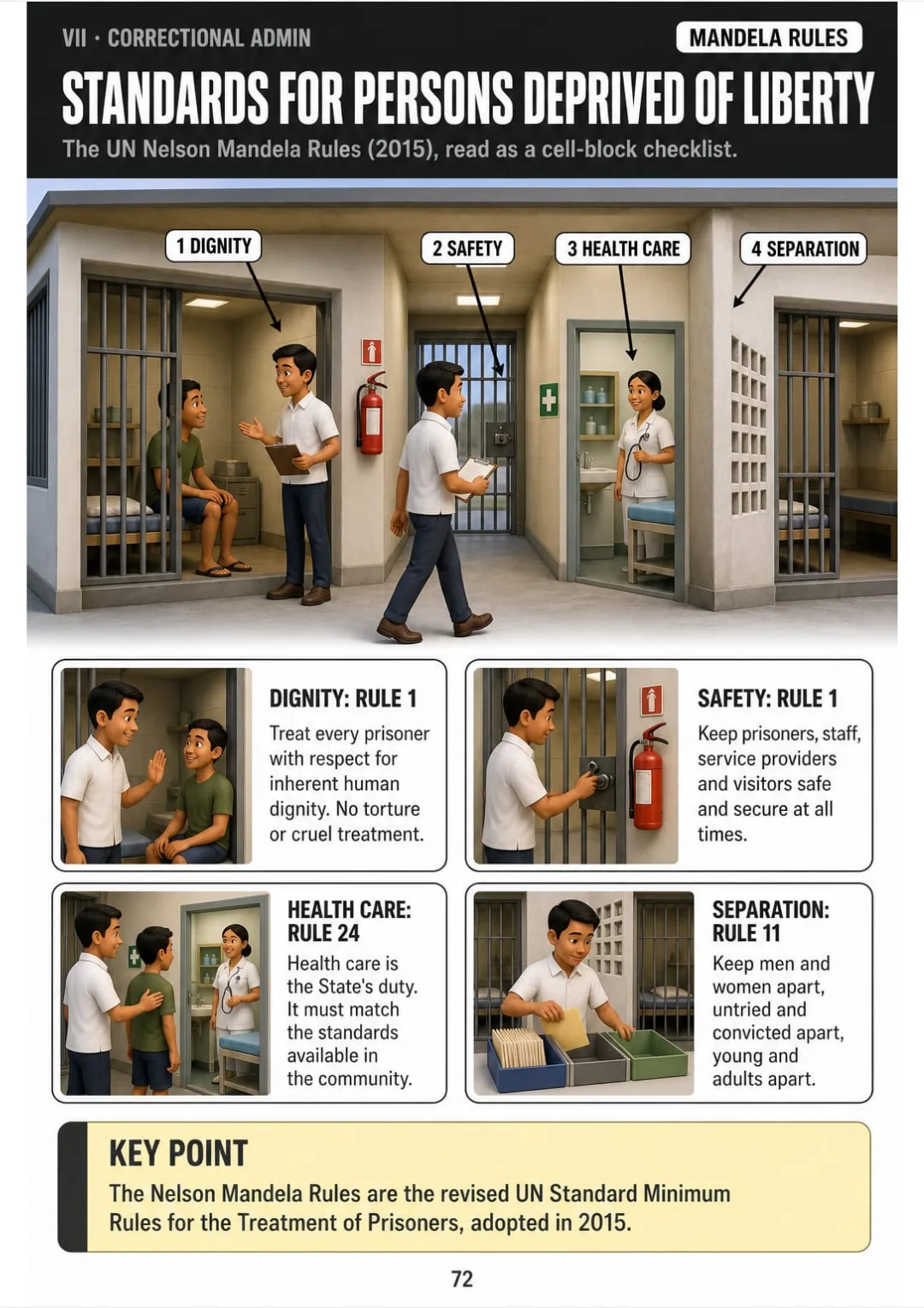
The UN Nelson Mandela Rules (2015) as a checklist: Rules 1, 11 and 24.
Six subjects, one sheet: record scores, mark anything near 60, estimate your weighted average.

Swipe to see more · tap to zoom →

You put in the hours. Your review never got a ranking.

You open your notes. Six subjects, no plan. You start with whatever is on top.

Three hours on Criminal Law tonight. By breakfast, theft and robbery blur into one. Day after day, you go back to page one.

Your reviewer gives every subject the same space. The weight of each one is never on the page.

A simple tracker: 6 subjects in review order, one score box each, checked against the 60 minimum.

This is the review map. The six subjects ranked by weight. One score box each. The 60% minimum per subject marked, so you see it before results day.

You know at a glance which subject to review first and which one is dragging your average down.

With the subjects ranked, you pick up each day where you stopped.

COMPARE

The same topic studied two ways

INSTEAD OF THIS
  • Read article numbers and legal terms packed into one long paragraph
  • Memorize definitions word by word and hope you pick the right one on exam day
  • Guess the difference between theft, robbery and estafa by re-reading the same paragraph
Under Article 308 of the Revised Penal Code, theft is committed by any person who, with intent to gain but without violence or intimidation of persons nor force upon things, shall take personal property of another without consent. Robbery under Article 293 requires taking personal property with intent to gain by means of violence against or intimidation of any person, or using force upon anything. Estafa under Article 315 covers swindling through false pretenses, fraudulent acts, or misappropriation of money or goods received in trust, on commission, or under any obligation to return the same.
CHOOSE THIS
  • See the deciding element of each crime drawn in one scene
  • Spot the difference at a glance: no violence, with violence, with deceit
  • Open the page on your phone and check in ten seconds
Arts. 308, 293 and 315: one deciding element separates each crime.
CONTENTS

Take a look: 8 parts, 73 topics

From the grade rule to the last review checklist: each part covers one subject in order of weight, with drawn scenes and the rule for each topic. Practice questions and the reason behind each answer are in the bonus book.

IYour Exam Map · pp. 6-9
  1. The 6 Subjects and Their Weight
  2. The Grade Rule: 75 Weighted Average, No Subject Under 60
  3. Turn the Weights Into a Review Order
  4. How to Use Each Page
IICriminal Law, Jurisprudence and Procedure · pp. 10-23
  1. Felony: Dolo or Culpa
  2. Attempted, Frustrated, Consummated
  3. Justifying or Exempting?
  4. Mitigating, Aggravating, Alternative
  5. Principal, Accomplice, Accessory
  6. The Ladder of Penalties
  7. Parricide, Murder, Homicide
  8. Theft, Robbery, Estafa
  9. Arrest Without a Warrant
  10. Article 125: 12, 18, 36 Hours
  11. From Complaint to Arraignment
  12. The Search Warrant
  13. Admissible Evidence: Relevant and Competent
  14. Hearsay and the Original Document Rule
IIICrime Detection and Investigation · pp. 24-36
  1. The Three I's: Interview or Interrogation?
  2. Rights in Custodial Investigation
  3. First Officer at the Crime Scene
  4. Search Patterns, Sketch and Photos
  5. Chain of Custody
  6. Algor, Livor, Rigor
  7. The Intelligence Cycle and Rating Information
  8. Surveillance: Fixed and Moving
  9. RA 9165, Section 21: The Required Steps
  10. Fire Investigation: Start at the Triangle
  11. Traffic Crash Investigation
  12. Special Laws: Match the Law to the Case
  13. Report Writing and Legal Forms: 5W and 1H
IVCriminology · pp. 37-48
  1. What Criminology Studies
  2. Classical or Positivist?
  3. Body and Mind Theories
  4. Strain: Merton's Five Adaptations
  5. Learning, Labeling, Control
  6. Human Behavior: Development and Disorders
  7. Victims and Opportunity
  8. Children in Conflict With the Law
  9. Ethics for the Profession
  10. Dispute Resolution and Crisis Management
  11. Research: From Problem to Design
  12. Research: Data, Ethics and APA
VLaw Enforcement Administration · pp. 49-58
  1. RA 6975: Where the PNP Stands
  2. NAPOLCOM, IAS, PLEB: Who Checks What
  3. PNP Ranks in One Ladder
  4. Organization: Four Principles, Line and Staff
  5. Leadership, Decisions and Character
  6. Police Plans: Sort by Purpose
  7. Patrol: Purpose and Types
  8. Use of Force: Necessary and Proportionate
  9. Private Security: RA 11917
  10. Policing Across Borders
VIForensic Science · pp. 59-68
  1. Fingerprints: Arch, Loop, Whorl
  2. Core, Delta and Ridge Count
  3. Latent, Patent, Plastic Prints
  4. Forensic Photography: Light, Lens, Exposure
  5. The Polygraph: What It Records
  6. Questioned Documents: Standards and Forged Signatures
  7. Lab Tests: Presumptive or Confirmatory?
  8. DNA Evidence in Philippine Courts
  9. Examiner's Report: Three Stages
  10. Examiner's Report: Marks and Comparison
VIICorrectional Administration · pp. 69-75
  1. Why Punish? Five Aims
  2. Who Holds Whom and Security Levels
  3. Therapeutic Community and Reintegration
  4. Standards for Persons Deprived of Liberty
  5. Probation: The 6-Year Line
  6. Probation or Parole?
  7. Pardon, Commutation, Reprieve, Amnesty
VIIIFinal Review · pp. 76-78
  1. Pairs That Are Easy to Mix Up
  2. Your Subject Score Check
  3. Your Last Review Checklist

Every topic gets its own page and its own drawn scene

Each page holds one idea, one drawing, and the rule that tells you what is being asked. You do not need to memorize a paragraph: the scene puts the name where you can see it.

Four stages of the cycle, then letters A to F for the source and numbers 1 to 6 for the information.

This page follows one tip around the intelligence cycle, then rates it: the letter for the source, the number for the information.

When you review intelligence, you have a drawing to go back to, not just a paragraph.

The scene holds the name, so you do not have to re-read the paragraph.

What's inside Criminologist Exam Scene by Scene

Ipp. 6-9

Your Exam Map

Your exam map: the six subjects, their weight, the grade rule, and how to turn that into a review order.

IIpp. 10-23

Criminal Law, Jurisprudence and Procedure

Criminal Law, Jurisprudence and Procedure: from felony elements to evidence rules, each article in one drawn scene.

IIIpp. 24-36

Crime Detection and Investigation

Crime Detection and Investigation: the three I's, crime scene steps, chain of custody, intelligence, fire, traffic, special laws, and report writing.

IVpp. 37-48

Criminology

Criminology: classical and positivist schools, strain, learning, labeling, control, human behavior, victims, ethics, dispute resolution, and research.

Vpp. 49-58

Law Enforcement Administration

Law Enforcement Administration: PNP structure, ranks, organization, leadership, plans, patrol, private security, and policing across borders.

VIpp. 59-68

Forensic Science

Forensic Science: fingerprints, forensic photography, questioned documents, the polygraph, lab tests, and DNA evidence.

VIIpp. 69-75

Correctional Administration

Correctional Administration: who holds whom, security levels, therapeutic community, PDL standards, probation, parole, and executive clemency.

VIIIpp. 76-78

Final Review

Final review: pairs easy to mix up, a subject score check, and your last review checklist.

Plus, 2 free books come with it

Criminologist Exam Score Drills

GIFT 1: «Criminologist Exam Score Drills»

Bought separately: US$ 17.90

Test yourself in each of the 6 subjects with our own practice questions, and see the reason behind each answer.

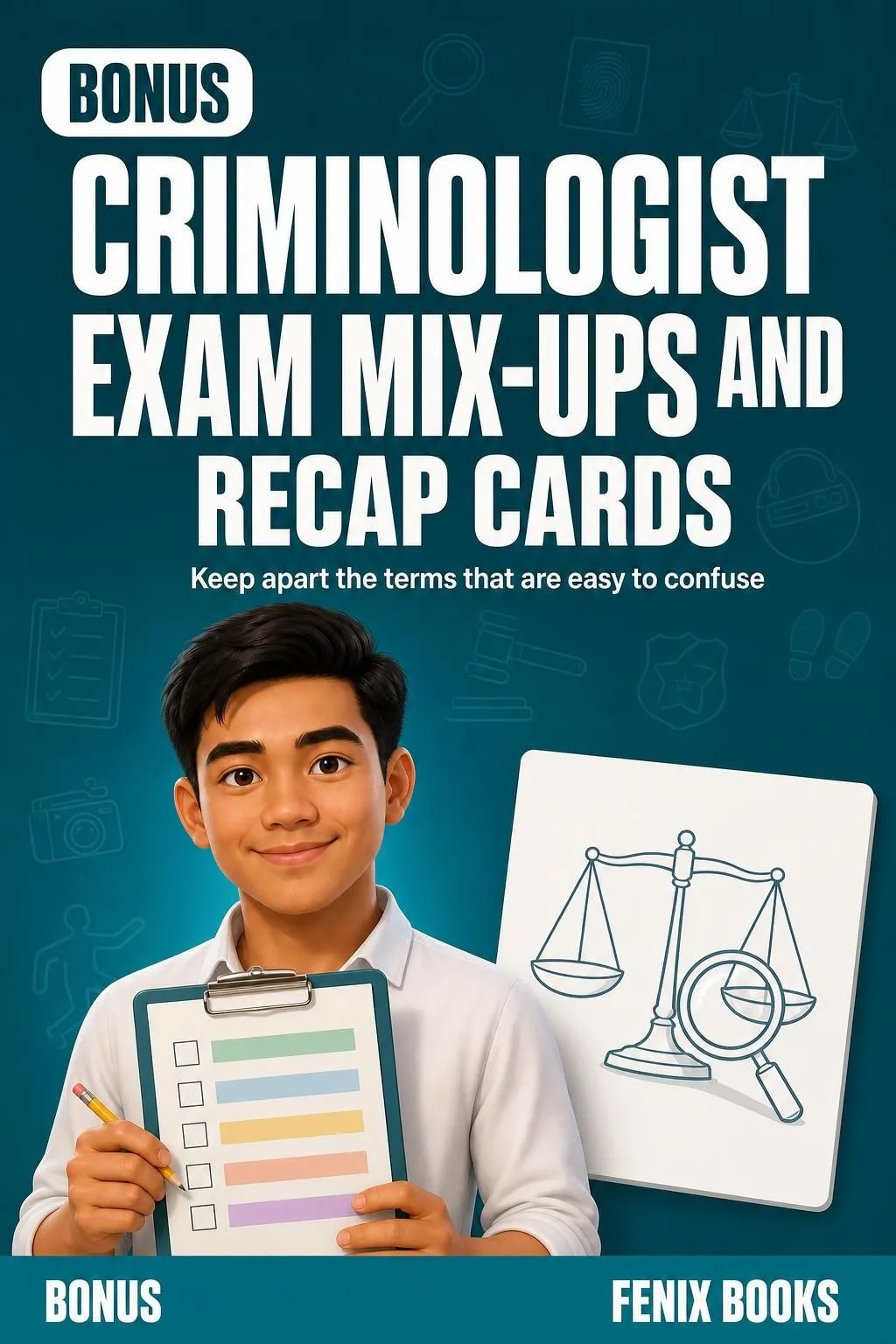
Criminologist Exam Mix-Ups and Recap Cards

GIFT 2: «Criminologist Exam Mix-Ups and Recap Cards»

Bought separately: US$ 14.90

Keep apart the terms that are easy to confuse, with short recap cards for each of the 6 subjects.

Your bundle: Criminologist Exam Scene by Scene and 2 gifts

  • Criminologist Exam Scene by Scene: 73 illustrated pagesUS$ 63
  • GIFT 1: Criminologist Exam Score DrillsUS$ 17.90
  • GIFT 2: Criminologist Exam Mix-Ups and Recap CardsUS$ 14.90
  • High-quality PDF file, ready to printIncluded
Total value US$ 95.80
BUNDLE PRICE
US$ 27
YOU SAVE: US$ 68.80
GET CRIMINOLOGIST EXAM SCENE BY SCENE · US$ 27

📄 Digital book in PDF: it comes by email. Nothing is shipped on paper.

Protected paymentEncrypted data30-day guarantee

PDF by email: You receive Criminologist Exam Scene by Scene as a PDF in your inbox, along with the 2 free books. You pay once: no installments, no extra charges.

Is this your review right now?

First-time taker with no clear plan

First-time taker with no clear plan

You graduated and the exam is ahead. You have notes, reviewers, maybe a review center — but no clear order for all six subjects. This guide gives you the weight of each subject and 73 drawn topics, one per page, in an order you can follow.

Retaker, for the full exam or one subject

Retaker, for the full exam or one subject

You took the exam before and one or more subjects did not reach the mark. You do not want to re-read the same reviewer the same way. This guide sorts the six subjects by weight so you spend your hours where they count.

Self-reviewer on a budget

Self-reviewer on a budget

You cannot pay for a review center or you are reviewing on your own between shifts. You need a complete map of the six subjects on your phone, with drawn topics you can check anywhere. Practice questions and the reason behind each answer are in the bonus book.

Everything your purchase includes

US$ 95.80US$ 27
GET CRIMINOLOGIST EXAM SCENE BY SCENE · US$ 27

📄 Digital book in PDF: it comes by email. Nothing is shipped on paper.

30DAYS
GUARANTEE

30 days to try it

Use it in your review for 30 days. If your subjects are still not in order or the topics you were stuck on are still unclear, tell us what did not work and we will refund you in full.

Common questions

Is this a printed book or a digital file?

It is a PDF. You receive it by email.

Can I read it on my phone?

Yes. It opens on your phone with any PDF reader. Once it is saved, you can read it without using data. Zoom in on any detail, or print the pages you prefer on paper.

Can I print it?

Yes. It is a standard PDF. You can print all of it or just the pages you need.

How will I receive the file?

It is a PDF sent to the email address you enter at checkout.

Is this an official reviewer from PRC?

No. This is an independent illustrated guide for the licensure exam in the Philippines. The content is checked against the Philippine Criminology Profession Act (RA 11131), including the grade rule (75 weighted average, no subject below 60), the Revised Penal Code and the other laws cited on the pages. It is not published by or affiliated with the Professional Regulatory Commission or the Board of Criminology, and it does not give a certificate.

Does it cover all six subjects?

Yes. Each subject has its own part. The book covers the main topics of each one, not every item of the exam.

I already have notes, reviewers and free reviews. Why pay for this?

Because your notes and reviewers do not rank the six subjects or draw each topic. This guide adds that order. Use it on its own or next to any review program. Your degree, review classes and supervised training still do their own job.

Will you charge me again later?

No. You pay once. The charge is in US dollars. Nothing renews on your card.

Is it just a summary for beginners? Are drawings enough for six subjects?

It is not a full textbook: it covers 73 topics across the six subjects. It gives you the order, the key distinction of each topic, and the rule to spot what is being asked. The bonus book adds practice questions with the reason behind each answer. Keep your reviewers for the full detail. If your basics are rusty, the drawings and simple English make it easy to follow.

Before you close this page

Photocopied notes won't rank your subjects for you. Here the six are laid out by weight, and every topic has a scene you can picture.

The exam has a date. Your review can have a plan.

Open it on your phone. See how the six subjects look when someone draws them for you.

US$ 27, paid once · 30-day guarantee · PDF by email

GET CRIMINOLOGIST EXAM SCENE BY SCENE · US$ 27

📄 Digital book in PDF: it comes by email. Nothing is shipped on paper.